For businesses in Canada who are coming to or have passed the $30,000 annual revenue mark, they must consider that they need to register for a GST (Goods and Services Tax) number. In this guide, we’ll take you through the steps on how to get a GST number in Canada. Your GST number is a key part of the process for any business to collect and pay GST on their sales while claiming the GST from their expenses.
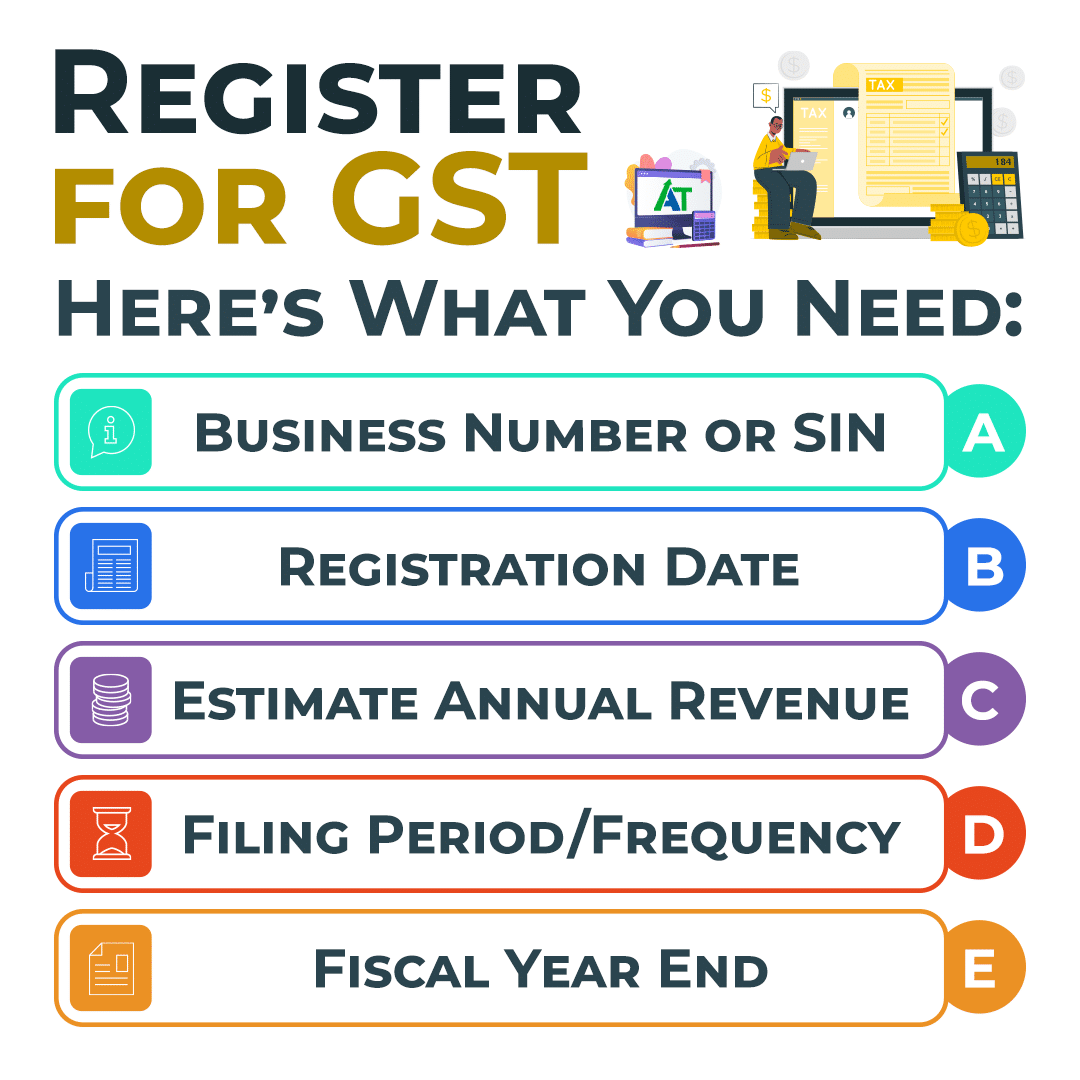
Business Number (BN) or Social Insurance Number (SIN): The Initial Step to Get a GST Number
Before starting the GST registration process, make sure you have either a Business Number (BN) or a Social Insurance Number (SIN). If you don’t have a BN yet, you can use your SIN instead. We recommend getting a BN for easier access to other tax programs that may apply to your business like the following:
- GST/HST program account (RT)
- payroll deductions program account (RP)
- import-export program account (RM)
- corporation income tax program account (RC)
Find out more about how to get yourself a Business Number through the CRA’s website by clicking here.
When Do I Need To Create A GST Number?
In Canada, businesses are generally required to register for a GST number once their taxable revenue exceeds $30,000. At this point, the Canada Revenue Agency (CRA) considers you a small supplier that has exceeded the threshold, meaning you must register for a GST/HST account and begin collecting GST on taxable sales.
This $30,000 threshold applies to most sole proprietors, partnerships, and corporations that provide taxable goods or services in Canada.
Once your revenue crosses this threshold, you must register for a GST number within 30 days. After registering, you are required to start charging GST or HST, depending on the province, for applicable sales and remit those taxes to the CRA.
What Happens when Your Business Passes the $30,000 Threshold
Let’s say you run a freelance graphic design business. From January to June, your revenue is $22,000. In July, your project income is $9000.
At this point, your total revenue reaches $31,000, which means you have exceeded the $30,000 GST threshold. Because you crossed the threshold in July, you must register for a GST number within 30 days and begin charging GST on future invoices.
Even if you were not collecting GST before reaching the threshold, the CRA expects you to register promptly once the limit is exceeded.
Some businesses choose to register voluntarily before reaching $30,000, especially if they want to claim Input Tax Credits for business expenses.
Selecting the Registration Start Date: Backdating GST Registration
Choosing the right date for your GST registration is important. Usually, this is the date when your annual revenue reached and/or exceeded $30,000. At this point in revenue, it becomes mandatory to register for a GST number in Canada. You may even want to consider backdating GST registration for a sole proprietorship, depending on when you hit the revenue threshold. If you have questions on what to do if you need to backdate GST registration, just contact us.
Backdating GST Can Be Strategic
Input Tax Credits
Input tax credits (ITCs) allow businesses registered for GST/HST to recover the tax paid on eligible business expenses. When a business purchases goods or services for commercial use, such as supplies, software, or marketing, it typically pays GST/HST on those costs.
When GST registration is backdated, ITCs can often be claimed on qualifying expenses incurred before the official registration date, as long as those costs relate to commercial activities and proper records are maintained. This can be especially valuable for businesses with high startup or early operating expenses, allowing them to recover tax that would otherwise be lost. However, backdating also means GST/HST may be owed on revenue from that same period, so the net impact depends on the balance between tax collected and ITCs claimed.
Organized Financial Records
Backdating GST/HST registration aligns your revenue reporting, tax filings, and accounting records so everything reflects the same timeline. Revenue is recorded correctly (net of GST), tax filings match when income was earned, and your books stay consistent without mixed periods.
This creates cleaner, more reliable financials with the CRA, reducing errors and audit risk, while making your business easier to manage, finance, and scale.
Estimating Annual Revenue: A Critical Component to Get a GST Number
To finish the registration process, you’ll need to provide an estimate of your annual revenue. This includes taxable sales, leases, and other supplies, but excludes supplies that are exempt, financial services, and certain property sales. Part of our accounting services includes helping you accurately estimate your annual revenue for GST registration. Keep in mind, this estimate doesn’t need to be exact, but do the best you can because it determines your filing period and frequency. This ranges from quarterly to annually, depending on your revenue and preferences.
Reporting Frequency Depends on Your Revenue
The CRA determines how often your business must report and remit GST based on your annual revenue:
- $1.5 million or less → Report annually
- $1.5 million to $6 million → Report quarterly
- Over $6 million → Report monthly
Choosing Your Fiscal Year End Based on Your Business Structure
Generally, sole proprietors and people considered to be self-employed choose a fiscal year that aligns with the calendar year. This makes it easier, considering that the income tax year lines up accordingly. Corporations may have a different fiscal year that doesn’t align with the tax year and can be any 365-day period in the year. Depending on your business structure, you’ll want to choose a fiscal year that works best for your unique business.
How Much Do I Charge For GST?
If your business is registered for GST with the CRA, you are required to add 5% GST to your invoices or receipts for taxable sales, unless the item is specifically exempt or zero-rated. However, if your business operates in a province that uses the Harmonized Sales Tax (HST), such as Ontario, Nova Scotia, New Brunswick, Prince Edward Island, or Newfoundland and Labrador, you’ll charge the combined HST rate instead, which varies by province. It’s important to clearly show the GST or HST amount on all invoices and to regularly remit these taxes to the CRA. Keeping accurate records and staying up to date with current tax rates ensures compliance and smooth business operations.
Methods of Registering for a GST Number in Canada
Here is a brief list on the methods used when registering for a GST number in Canada:
- Online Registration: This is the fastest and most efficient method. Using the Business Registration Online (BRO) service streamlines the registration process and can be done by clicking here. For non-resident businesses, check out the CRA’s Guide RC4027, “Doing Business in Canada – GST/HST Information for Non-Residents”.
- By Mail or Fax: If you prefer a more traditional method, use the form RC1. This form is used to “Request for a Business Number and Certain Program Accounts” and can be completed and submitted by mail or fax.
- By Phone: Businesses can call the business enquiries line at 1-800-959-5525 to register for a BN and other CRA program accounts, including the GST account.
Start registering for your GST number using the CRA’s platform by clicking here.
Let Advanced Tax Help You Obtain Your GST Number
Obtaining a GST number in Canada is an important step for businesses. Having a reliable CPA accounting firm by your side makes the process and filing much simpler. Plan your registration in consideration of your revenue, choose an appropriate fiscal year end, and provide a revenue estimate. If you have questions or need assistance, our team at Advanced Tax is here to help. your GST number in Canada with confidence, while making sure that your business is compliant with the Canada Revenue Agency.